

This post may contain affiliate links. Please read my disclosure and privacy policy.
This post may contain affiliate links. Please read my disclosure and privacy policy.
Learn how to make a loaf of high protein tofu lentil bread (10 grams protein per slice!) without flour, oil, gluten or grains. Make the batter in a blender (with ease) and bake up a hearty loaf that is wonderful plain or toasted with all of your favorite toppings.

Grain-Free Vegan Protein Bread
This bread is inspired by a viral recipe for cottage cheese lentil bread that looked intriguing, except for the cottage cheese part :). I knew I had to try it, with some plant-based tweaks.
In place of the cottage cheese, I gave firm tofu a try. I liked the bread overall, but the bottom inch of the bread was very wet and compacted, and almost raw in flavor. I noticed this same density in photos of the original cottage cheese lentil bread, too.
The bread definitely needed a boost to help it stay tall from its baking powder rise. Some whole psyllium husks did the trick! The husks also add to the crustiness of the bread (hooray for crust!).
The bread is hearty, with the taste and texture of German-style loaf of bread. It makes excellent toast, can be sliced thin for sandwiches, and is also a perfect accompaniment to soups and salads.
My cheap-o side also loves the frugality of this protein loaf. A popular brand of protein bread at our local supermarket costs close to nine dollars (eek!). So making this loaf will make you feel good in many more ways than one.

Recipe Benefits
- Made with 4 ingredients
- High protein
- High fiber
- Grain-free
- Gluten-free
- Vegan (egg-free & dairy-free}
- Frugal
- Oil-free (e.g., no olive oil, coconut oil or other vegetable oil)
- Nut-free
- Flourless
- Minimal ingredients
- No added starches (e.g., tapioca starch, potato starch)
- Fast & easy to prepare
- No yeast
Ingredients for High Protein Tofu Lentil Bread
The exact amounts of each ingredient are indicated in the recipe card at the end of the post.
- Uncooked lentils (Any variety: e.g.,brown lentils, split red lentils, green lentils, black lentils)
- Extra-firm tofu
- Whole psyllium husks (not psyllium husk powder)
- Baking powder (certified gluten-free, as needed)
- Optional: salt
The gluten free bread recipe also uses plain water (I use filtered tap water). Salt is an optional ingredient.
Salt is an optional ingredient. You do not needed to use it for the recipe to work, so you can omit it altogether, or reduce the amount to what suits your needs. I like to add salt to the recipe, so I provide a recommended amount of salt (to enhance the flavor of the bread).
Step by Step Instructions
Note that the complete directions are also in the recipe card below.
- Step One: Soak the Lentils Place the lentils in a large mixing bowl. Cover with enough boiling water to cover the lentils with 1 to 2 inches of liquid. Allow to soak for 20 minutes, then drain through a mesh sieve or colander. Rinse the lentils under cool water, draining any excess water.

- Step Two: Preheat the Oven and Prepare the Pan Preheat the oven to 350F (180C). If your oven has a convection setting, I recommend that you do not use it for this bread. This bread needs to be baked using the regular (radiant) heat. More about this in the FAQS at the end of the post.
- Line a 9×5 inch (22.5×12.5 cm) loaf pan with nonstick parchment paper. If you are ok, with adding oil to the recipe, you can opt to spray the pan with nonstick cooking spray, or lightly oil/grease the pan.
- Step Three: Blend Tofu and Water Place the drained drained tofu (crumble, cut into cubes, or break into pieces) and 1/2 cup water in a blender (a high-speed blender or regular blender). Blend until smooth.
- Step Four: Add Lentils to Blender Add the drained, soaked lentils to the tofu mixture. Blend on high speed, stopping once or twice to scrape down the sides of the blender container, until the lentils are completely broken down and the batter is smooth (the mixture will be thick).
- Step Five: Add Remaining Ingredients Scrape the batter into a large mixing bowl (it will get too thick, with the psyllium husks, in the blender). Add the psyllium husks, baking powder, and optional salt to the bowl. Stir until blended.
- Step Six: Spread into Prepared PanSpread the batter into the prepared pan and smooth the top with a rubber spatula or the back of a spoon. Cut a line (about 1/2 inch deep) through the middle of the batter (lengthwise).
- Step Seven: Bake the Bread Bake in the preheated 350F (180C) oven for 65 to 70 mins until risen and the surface of the bread is a deep golden brown. A tester inserted near the middle of the bread should come out with only a few moist crumbs attached.
- Step Eight: Cool Transfer the pan to a cooling rack. Cool the bread in the pan for 15 minutes. Remove the loaf of bread from the dish (slide a butter knife around sides, as needed, to assist the release). Place the loaf on the cooling rack and cool completely.

Remove the loaf of bread from the dish (slide a butter knife around sides, as needed, to assist the release). Place the loaf on the cooling rack and cool completely.
Slice it Thick or Thin
This is a sturdy bread, so feel free to slice it thick, thin, or anywhere in between.

Texture & Taste
Texture: This is a hefty bread with significant rise and a firm texture. I love that I can slice it super thin for sandwiches or thicker for toast (it makes great toast).
Taste: The bread has a neutral flavor reminiscent of a hearty wheat bread or whole grain bread.

Serving Suggestions
This high protein bread is delicious on its own, or with light spread of hummus, or vegan butter.
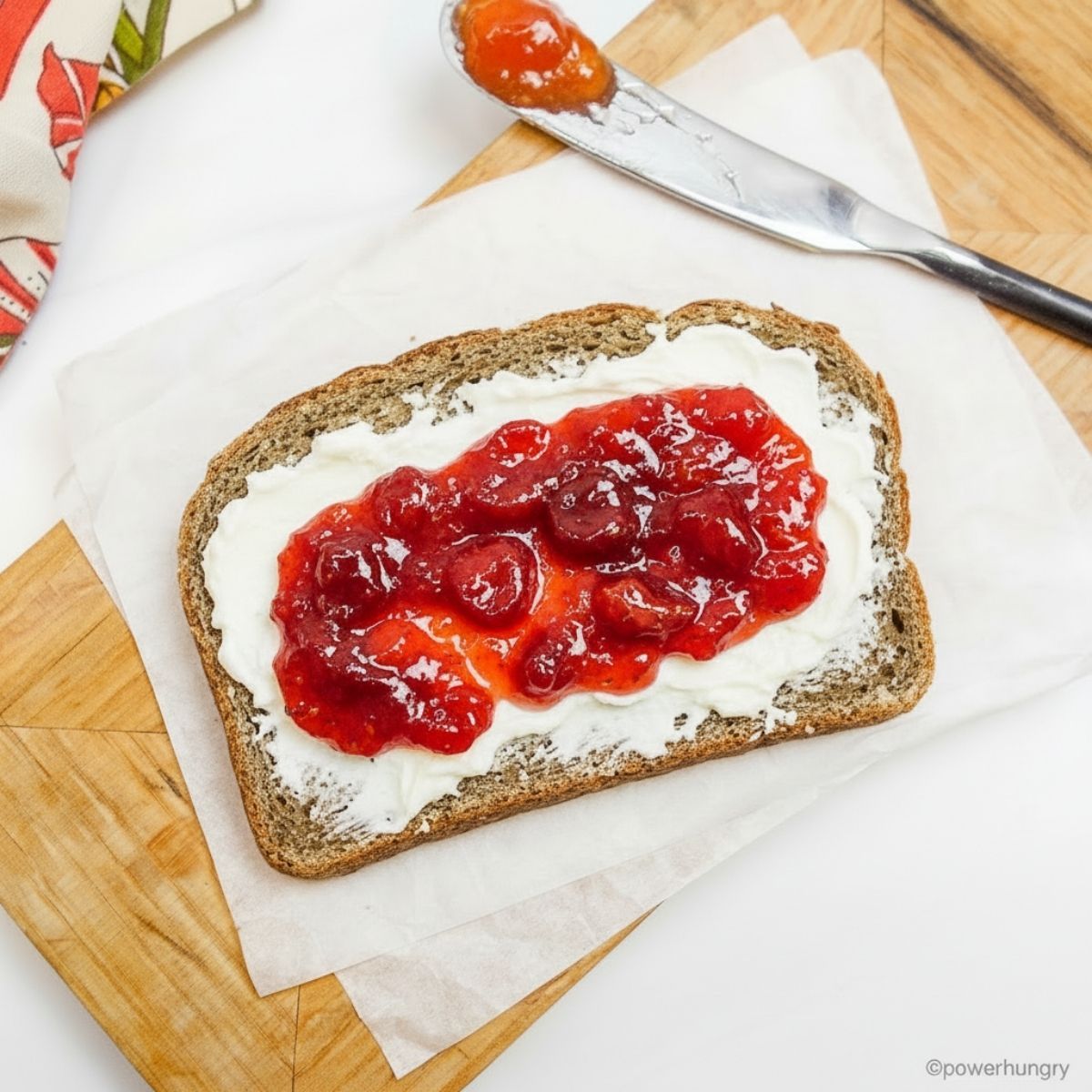
I like to eat the bread fresh the first day with whatever is on the menu for dinner (e.g., soup, salad, pasta). You can store it in the fridge for a few days, but I prefer to slice and freeze whatever is left. When I want another slice, I pop a frozen slice directly into the toaster for breakfast (I love it with cashew cream cheese and jam), or for a snack (with a savory spread, like my Green Pea Guacamole).
Flavor Variations
This bread can be flavored in a multitude of ways. For example, add fresh or dried herbs (e.g., a tablespoon of chopped fresh rosemary, some fresh or dried thyme, garlic powder, onion powder, sweet or savory spices, or ground pepper. You can also sprinkle the batter with seeds (e.g., sesame seeds, poppyseeds, hemp hearts) before baking.
FAQ
- How should I store the high protein lentil tofu bread? Store the cooled bread in an airtight container at cool room temperature for 2 days, the refrigerator for 3 days, and the freezer for up to 6 months. As mentioned above, I like to slice the bread, before freezing, so I can remove one or a few slices at a time.
- Can I use other legumes in place of the lentils? I have not tested with other legumes, but that should work. Use the same weight (16 ounces) of dried beans in place of the lentils.
- Can I use a food processor instead of a blender? I do not recommend it. A food processor cannot liquify the lentils into a smooth batter.
- My oven has a convection setting. Should I use it for this bread? No, I do not recommend it. Convection ovens are wonderful for many types of recipes, but not every recipe. Convection ovens excel at quick, crisp cooking. They are not the right choice for long slow baking, and that is what this unconventional bread needs.
- Convection ovens (or the convection oven setting) can force the outer layer of this bread to rise and separate from the inside of the bread. This will lead to several results: (1) a big bubble under the surface of the loaf; (2) a gooey middle and bottom; and (3) a hard outer crust.
- This bread needs the moderate, radiant heat of a conventional (not convection) oven.
- My bread came out gooey in the middle. Why? The bread should not be gooey at all. But if it happens, possible reasons are as follows:
- Baking in a a convection oven instead of conventional oven. See the section above explaining why this makes a huge difference.
- Inaccurate measurements. Even if you have been baking since forever, it is possible that you mis-measured. It is easy to get distracted for a split second–it happens to everybody! If you measured using cups, I urge using a scale next time around. You will love using the scale to measure once you start.
- Oven temperature is inaccurate. I regularly check my oven temperature setting using an inexpensive oven thermometer. Check to make sure the oven is accurate before baking. If the oven is too hot, it can force a faster rise to the bread, leading to a bubble under the top of the loaf.
- Can I Use one of your soy-free tofu recipes in place of the soy tofu? I have not tested it, but that should work fine. Use an equal amount of the red lentil tofu, pumpkin seed tofu, hemp tofu, any legume tofu, chickpea flour tofu, or split pea tofu that has been made in the extra-firm manner.
- Can I Use Something Other than Whole Psyllium Husks? No, for this recipe it must be whole psyllium husks (or psyllium powder. See next question). Other gelling agents, such as flax seeds, flaxseed meal or chia seeds, will not work as direct substitutes (they might work, but it would involve some experimenting to determine their efficacy).
- Can I Use Psyllium Powder? I have only tested the bread with whole psyllium husks, not psyllium powder. You should be able to use an equal weight of psyllium powder (40 grams), which is 8 teaspoons of powder (or 2 tablespoons + 2 teaspoons pf powder).
Happy baking!
More Easy High Protein Bread
- Easy Oat Protein Bread
- Bean Millet Protein Bread
- Buckwheat Flour Protein Bread (3 Ingredients)
- High Protein Oat Bread Bites
- High Protein Lentil Bread
- High Protein Split Pea Bread

High Protein Tofu Lentil Bread
Equipment
- 1 9×5 inch loaf pan
Ingredients
- 16 ounces dried lentils (uncooked), (any variety, such as tan lentils, green lentils, or split red lentils)
- 14 ounces extra-firm tofu, drained (not pressed), about 1 cup when crumbled
- 1/2 cup water
- 1/2 cup whole psyllium husks, (not psyllium powder; see notes)
- 4 teaspoons baking powder, (certified GF, as needed)
- Optional: 1 teaspoon salt
Instructions
- Place the lentils in a large mixing bowl. Cover with enough boiling water to cover the lentils with 1 to 2 inches of liquid. Allow to soak for 20 minutes, then drain through a mesh sieve or colander. Rinse the lentils under cool water, draining any excess water.
- Preheat the oven to 350F (180C). If your oven has a convection setting, I recommend that you do not use it for this bread. This bread needs to be baked using the regular (radiant) heat. More about this in the FAQS at the end of the post.
- Line a 9×5 inch (22.5×12.5 cm) loaf pan with nonstick parchment paper. If you are ok, with adding oil to the recipe, you can opt to spray the pan with nonstick cooking spray, or lightly oil/grease the pan.
- Place the drained drained tofu (crumble, cut into cubes, or break into pieces) and 1/2 cup water in a blender (a high-speed blender or regular blender). Blend until smooth.
- Add the drained, soaked lentils to the tofu mixture. Blend on high speed, stopping once or twice to scrape down the sides of the blender container, until the lentils are completely broken down and the batter is smooth.
- Pour the batter into a large mixing bowl (it will get too thick, with the psyllium husks, in the blender). Add the psyllium husks, baking powder, and optional salt to the bowl. Stir until blended.
- Spread the batter into the prepared pan and smooth the top with a rubber spatula or the back of a spoon. Cut a line (about 1/2 inch deep) through the middle of the batter (lengthwise).
- Bake the bread in the preheated 350F (180C) oven for 65 to 70 mins until risen and the surface of the bread is a deep golden brown. A tester inserted near the middle of the bread should come out with only a few moist crumbs attached.
- Transfer the pan to a cooling rack. Cool the bread in the pan for 15 minutes. Remove the loaf of bread from the dish (slide a butter knife around sides, as needed, to assist the release). Place the loaf on the cooling rack and cool completely.


thanks for the recipe! i had to add quite a lot of water because it didn’t blend up. did i miss something or is it just 1/2 cup of water?
Hi noa! So glad that you like the bread! Yes, the 1/2 cup water is correct. I am glad that your loaf came out fine with the added water. you mention that you did so because the mixture “did not blend up.” I am wondering, did you blend the water and tofu first? That become the liquid for the bread, so it is important to blend that first before adding the lentils. It will seem stiff at first, but then as the lentils break down it becomes smooth. Also, I want to make sure that you added the psyllium husks AFTER removing the lentil-tofu mixture from the blender. As I mention in the recipe, the mixture will become far too thick if you try to blend the psyllium husks into the batter while still in the blender. Cheers!
Love the red lentil/tofu bread! Making my 2nd loaf as I write this. Great taste, texture and super healthy! Thank you for sharing this with us!
Whoohoo, glad you love the bread, Christine! My please sharing, and thank you so much for taking the time to post a review, it means a lot 🙂
I accidentally cooked my lentils completely after soaking them for a day. Can I still use them in this bread or should I try over with your instructions for the lentils( cover in boiling water and soak for 20 min)?
Hi CR!
Alas, no, the recipe will not work with cooked lentils (the nature of the protein is changed after cooking; it would be similar to using hardboiled eggs in a bread recipe that calls for fresh eggs). All the best.
This is magic! It rises and slices so well. This makes a fairly inexpensive high protein bread.
Thank you for the recipe
Diane
Hooray! I am so glad it was a success Diane. Enjoy! 😊
This sounds like a very interesting variation of the lentil bread that I make. Mine does not have tofu in it and it has Apple cider vinegar instead. I am excited to try this. My question is, if I soak my orange lentils for six hours, can I skip the boiling step? And will that be the same? Is the idea just to get them soaked? Thank you so much for sharing your recipe.
Hi Jeri! Yes, you can soak lentils for a longer period in room temp or cold water. The boiling water version is a quick method. Do what you prefer 😊
Not sure what I am doing wrong, but I’ve tried this loaf twice and it will not rise! My baking powder is not expired, I checked. I still enjoy the bread, but wish I could get it to rise.
Hi Natasha,
Oh no, I am sorry to hear that the bread did not rise. That definitely should not happen–this is a particularly high rising bread. It definitely sounds like baking powder is the issue. Here are some possible reasons why, even if you baking powder is not expired: (1) “Not Expired” Doesn’t Always Mean “Active”–since baking powder is a chemical leavener that relies on a very specific reaction between an acid and a base. The moment moisture or even high humidity gets into that tin, the reaction starts—and once it starts, it can’t be paused. So, if you live in a humid climate or accidentally used a damp measuring spoon, the powder can fizzle out before a batter like this bread is mixed up. Further, it is a better to replace the baking powder 6 to 12 months after it is opened, regardless of the date on the bottom. The seal is never completely airtight once it’s been opened, so baking powder can lose its power aver time. You can test your baking powder by putting 1/2 teaspoon of baking powder in a small bowl. Pour 1/4 cup of hot tap water over it. If it bubbles and fizzes vigorously immediately, it’s good to go! If it just sits there or bubbles weakly, it’s time to toss it.
Last possibility: Most baking powders are double-acting, meaning they react twice: once when they hit liquid and again when they hit the heat of the oven. If you mix the tofu bread dough and let the dough sit (e.g., waiting for the oven to preheat) that first chemical reaction finishes and the bubbles start to pop, meaning the carbon dioxide (the “lift”) escapes. and the structure of the dough “settles,” making it too heavy for the second heat-reaction to lift it back up.
I hope you will consider giving the bread a second try!
Incredible. This is going to be my new go to bread, it’s so easy to make and comes out delicious and hearty. It rises to the size of a traditional loaf of bread! I love that it’s packed with nutrition but only has a few ingredients. Thank you!
Im so glad it turned out so well, Jen! Enjoy!
Will give this a go but a note to anyone using powder psyllium, it absorbs more water than flakes, so I always use 70-80% powder if replacing flakes
Hi Boze,
Psyllium powder is just ground whole psyllium husks, so it’s all about using the same weight of powder as husks, not the same volume, as I mention in the notes. If measuring with standard measures, not weights, 1 teaspoon of powder (5 grams) is equal to 1 tablespoon of whole husks (5 grams). Cheers.
Camilla, This recipe does look wonderful. Thank you for sending me the link. I have not tried it yet, but it’s on my list now! Yum.
You are very welcome, Sandy!
Hi, just need a little more clarification – in a couple places you say 2 Tbsp psyllium husks, but the recipe says 1/2 cup and 40 g. Guessing it’s the 1/2 cup that’s wrong? Thanks for clarifying!
Hi Lauri! Apologies. The recipe card is correct (1/2 cup whole psyllium husks, which is 40 grams). I’ve made the correction earlier in the post, thanks for pointing it out.
I made two loaves before the storm hit yesterday. The whole family is loving it! It was very easy to make and produced a beautiful, very high loaf! I plan to add this to my regular rotation of recipes. Thank you!
That’s wonderful, Carolina! Enjoy!
Beautiful recipe. It came out just as photographed in the post, but I think mine may have risen even higher than yours! It’s a winner.
Excellent, AC! Thanks for taking the time to let me know it was a success. 🙂
This bread is a life changer. It is absolutely beautiful, like a loaf of regular wheat bread. The taste reminds me of whole wheat bread. I have been enjoying the bread tremendously for morning toast and sandwiches. Many, many thanks!
Enjoy, Miho! I am so glad you like the bread (I love it for fast, too :))
Have you tried making this in a bread machine?
Thank you, the recipe looks great and I will try it either way.
Hi Leticia,
I haven’t, but I imagine it could work on the bake setting. Cheers.
I just love all your recipes & but just now am really especially enjoying all the choices of non-grain & high-protein, high-fibre breads.
Sadly, my ovens don’t have a choice of ‘non-convection’ which you recommend for them, but my Ninja multi-cooker does have a bake setting – although not degree-specific temperatures (High, Med- High, Medium, Med-Low & Low – their breads cook at Med or Med-high), would your lentil & other non-gran breads (well, any of your breads) cook OK in that? (I belief the Ninja multi-cooker is based on the Instapot ones?)
I do hope you are getting a lot more global customers these days? I’ve been recommending your website on all the global, Healthy & WFPB web chat & peer support groups I belong to, as you & your recipes really helped me thrive going down a WFPB route & also encouraged me to experiment more, which I’ve found so freeing, such fun & mentally stimulating (especially as I try to reconstitute my less than successful ventures into something useful for my attempted zero waste kitchen😂)
I have been asked by a few group members in non-tech receptive areas, whether you have or will bring out any cookery books? They would find that so helpful & easier than some of their treks to their nearest tech hubs. (A few drive more than 150+ miles to join us online! So really keen, & both I & they would willingly purchase. I am UK based, and regularly check my book supplier sites, but never found any by you, yet?)
Thank you so very much!
The recipe list 1/2 cup of water.
it doesn’t appear in the instructions.
Did you add water to blender?
Hi Liliya,
Thank you so much for catching that! I have corrected the recipe card. The 1/2 cup water goes into the blender with he soaked lentils and tofu.
Quick question/s… is it 2 tablespoons of psyllium husk or 10 tablespoons? When you toggle between US custom and metric, it changes. Also, can I use shelf-stable firm, silken tofu? It is what I have and getting a different tofu is not easy for me. I live a few hours in the mountains away from town. Thank you for all your recipes and your time.
Hi Robe,
Thank you for catching that! It is 10 grams for Metric. I have changed it . Thank you so much for letting me know, as well as for your kind comment 🙂